

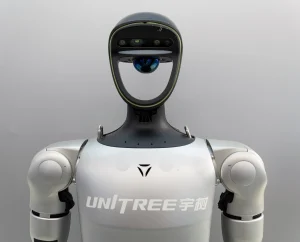




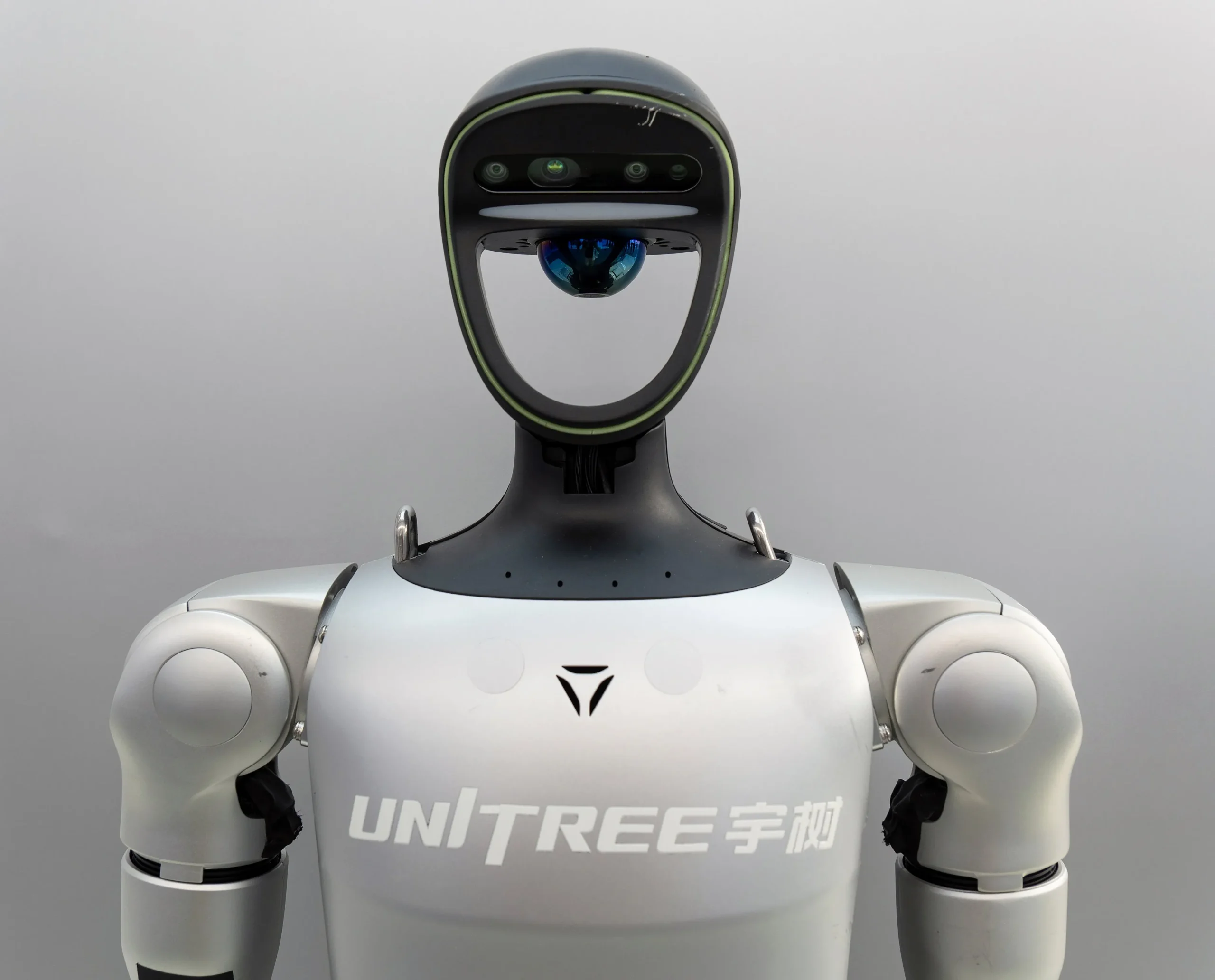
AI-Powered Humanoid Robots
TABLE OF CONTENT
Introduction to AI-Powered Humanoid Robots
Evolution of Humanoid Robotics
Spotlight on Unitree G1 and R1
Other Leading Humanoid Robots (Ameca, Sophia, Atlas)
Real-World Use Cases of Humanoid Robots
Where to Buy, Delivery, and Affiliate Links Section
Introduction to AI-Powered Humanoid Robots
The Rise of the Modern Robot Era
In the past decade, robots have rapidly moved from factory floors into everyday life — from cleaning homes and delivering packages to assisting in healthcare and education. But among all types of robots, humanoid robots stand out as the most fascinating. These are machines designed to look, move, and even think like humans. With the power of artificial intelligence (AI), humanoid robots are beginning to bridge the gap between mechanical precision and human-like interaction.
What Makes a Robot “Humanoid”?
A humanoid robot typically has a head, torso, arms, and legs, allowing it to replicate basic human motions such as walking, grasping, and even facial expressions. Unlike industrial robots that perform repetitive tasks, humanoids are designed for adaptability — they can interact naturally, learn from their surroundings, and perform multiple functions.
These robots often use:
-
Computer vision to recognize people and objects .
-
Natural language processing (NLP) to communicate
-
Machine learning algorithms to adapt behavior
-
Actuators and sensors to mimic muscles and nerves
Together, these technologies create a new class of intelligent machines capable of performing tasks once thought to require human intuition and movement.
The AI Advantage
Artificial intelligence is the heart of the humanoid revolution. It enables robots not only to execute commands but also to understand context and respond intelligently. Modern humanoids are powered by neural networks that analyze speech, interpret gestures, and make decisions in real time. This fusion of AI and robotics has transformed what was once science fiction into a practical, evolving technology.
Why Humanoid Robots Matter Today
Humanoid robots are not just experimental showcases. They are now being developed for real-world applications — helping the elderly, assisting workers, guiding visitors, teaching children, and even performing dangerous rescue missions. Companies like Unitree Robotics, Engineered Arts, and Boston Dynamics are leading this transformation by making advanced humanoids more affordable and commercially available.
The emergence of AI-powered humanoid robots marks a turning point. They represent the next stage in human-machine collaboration, where robots will no longer just follow instructions but act as partners — capable of learning, adapting, and evolving with us.
Preview of What’s Ahead
In the following sections, we’ll explore:
-
The evolution of humanoid robots from early prototypes to today’s intelligent models
-
Detailed profiles of Unitree’s G1 and R1 humanoid robots, including specs and capabilities
-
A look at other leading humanoid robots such as Ameca, Sophia, and Atlas
-
Real-world use cases in business, education, and home environments
-
Where you can purchase these robots, get delivery worldwide, and access affiliate offers from
Samuelc Robotics

2: The Evolution of Humanoid Robotics
From Mechanical Dolls to Intelligent Companions
The journey of humanoid robotics began long before the age of artificial intelligence. As early as the 15th century, inventors like Leonardo da Vinci envisioned mechanical knights that could mimic human motion. Over time, these early automata evolved into programmable machines, giving rise to the first generation of humanoid robots in the 20th century.
In the 1970s and 1980s, companies such as Waseda University (Japan) created the WABOT series, capable of simple walking and communication. Later, Honda introduced ASIMO, one of the first truly mobile humanoid robots, capable of running, climbing stairs, and recognizing faces — a monumental step that defined modern robotics.
The Role of Artificial Intelligence
While early humanoids were largely mechanical marvels, the introduction of AI and machine learning in the 21st century changed everything. Instead of executing pre-programmed movements, robots could now perceive their environment, learn from data, and adapt their actions.
This transition marked the shift from “robots as tools” to “robots as intelligent systems.”
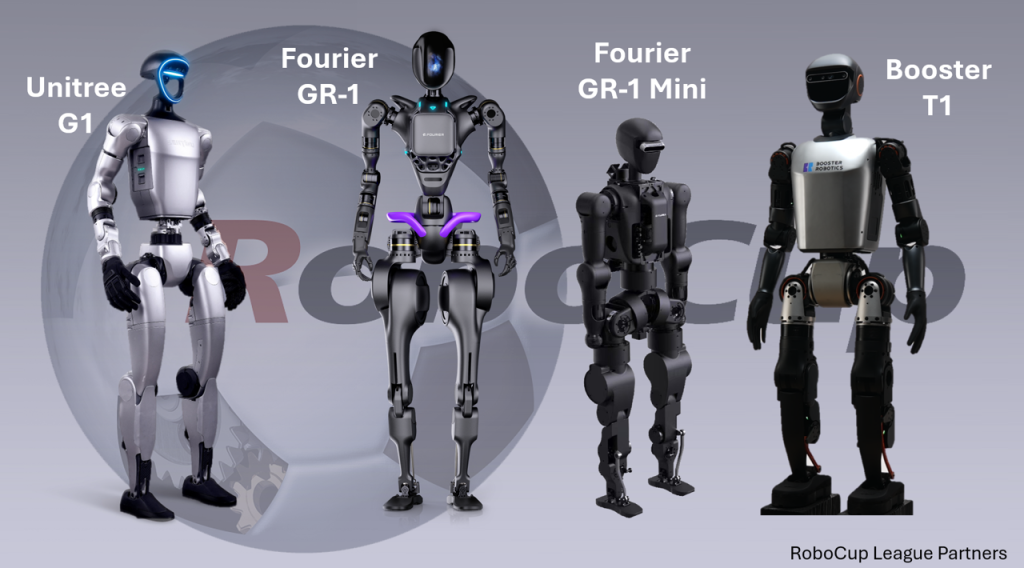
Today’s humanoids — such as Unitree’s G1, Ameca, and Sophia — are driven by deep learning, vision recognition, and speech models, allowing them to:
-
Engage in real-time conversations
-
Interpret emotional cues
-
Perform delicate movements with balance and precision
Affordability and Accessibility
One of the most remarkable recent developments in humanoid robotics is price reduction. For decades, creating a humanoid robot cost hundreds of thousands of dollars, limiting them to labs and research centers.
However, companies like Unitree Robotics are disrupting the market by introducing high-performance models such as the Unitree G1 and Unitree R1 at a fraction of traditional costs.
This democratization means small businesses, universities, and even individual consumers can now own or experiment with humanoid robots, accelerating innovation worldwide.
Humanoids in the Age of AI Integration
Modern humanoids don’t just look like humans — they think more like them too. With cloud connectivity and AI integration, these robots can access massive datasets, process complex tasks, and even collaborate with other robots or IoT devices.
For instance:
-
Unitree G1 uses advanced AI-based motion control for agile movements.
-
Ameca employs facial recognition and generative AI for realistic conversations.
-
Atlas by Boston Dynamics demonstrates unmatched physical agility for industrial and research applications.
These breakthroughs reflect a larger trend: humanoids are no longer a glimpse of the future — they are part of the present technological landscape.
The Next Chapter: Everyday Integration
As manufacturing costs decrease and AI systems become more refined, humanoid robots are poised to become part of daily life. Within a few years, it will be normal to see humanoids assisting in hospitals, serving customers, teaching in classrooms, or even functioning as household companions.
This evolution highlights not just technological growth but also a shift in human perception — from curiosity and caution to acceptance and collaboration with machines.


